Sunday, 4 October 2015

Louis II de la Trémoille

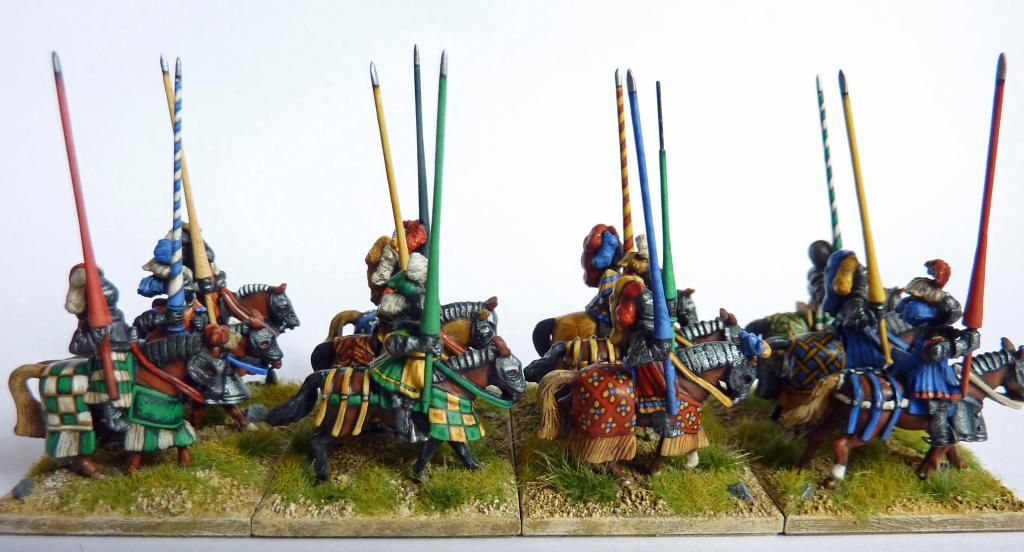
Now I am catching up with actual painting progress - this is one of the most recent groups that I have painted. Louis de La Trémoille was one of the most prominent French Generals of the Italian Wars from Fornovo to his death at Pavia.


The figures are Minifigs - the current 3rd generation with some Milliput modifications to the gendarme and general's skirts and the gendarmes' horse barding as well as my usual replacement of the bendy lance with brass rod and Lilliput. Whilst the general and gendarme figures are pretty good, I don't think the bugler is anything like as nice a figure as the 2nd generation one which I used with Bourbon. Unfortunately there aren't many options for early 16th Century heralds. 

I have read that coats of arms were not worn by this time but the pictures I found of Louis all show him with an elaborately decorated tunic with his own arms and those of a Marshal of France so I was in two minds about it. In the end the fact that the model's tunic has a lot of creases persuaded me to believe the 'no heraldry' line.

Overall I was very pleased with these. I seem to have got the hang of varnishing and have had no problems with either a satin finish or white patches in the creases. 

Charles III, Duke of Bourbon and some Mounted Crossbowmen

My plan original plan was to build a collection with a core that, with a few flag swaps, could pass for French, Imperial or one of the Italian states. Who better then as a general than Charles III, Duke of Bourbon who was Constable of France, played a prominent part at Marlignano then switched sides in 1523 and fought for the Imperialists at Pavia and finished up sacking Rome with an Imperialist army.

The figure for Charles is an old Asgard/TTG general on a Minifigs horse, accompanied by a current Minifigs (3rd generation) gendarme with a hand painted banner and a Minifigs 2nd generation bugler. I don't understand why some of the Minifigs 2nd generation figures were replaced as many - like this one - are much superior to the ones which replaced them. I had some varnishing problems and ended up with a slightly satin finish and too-thick varnish.


These were some Minifigs 2nd generation figures which I had had in the lead pile for a long time. They look a bit early to me but are nicely proportioned and moulded.


Monday, 21 September 2015

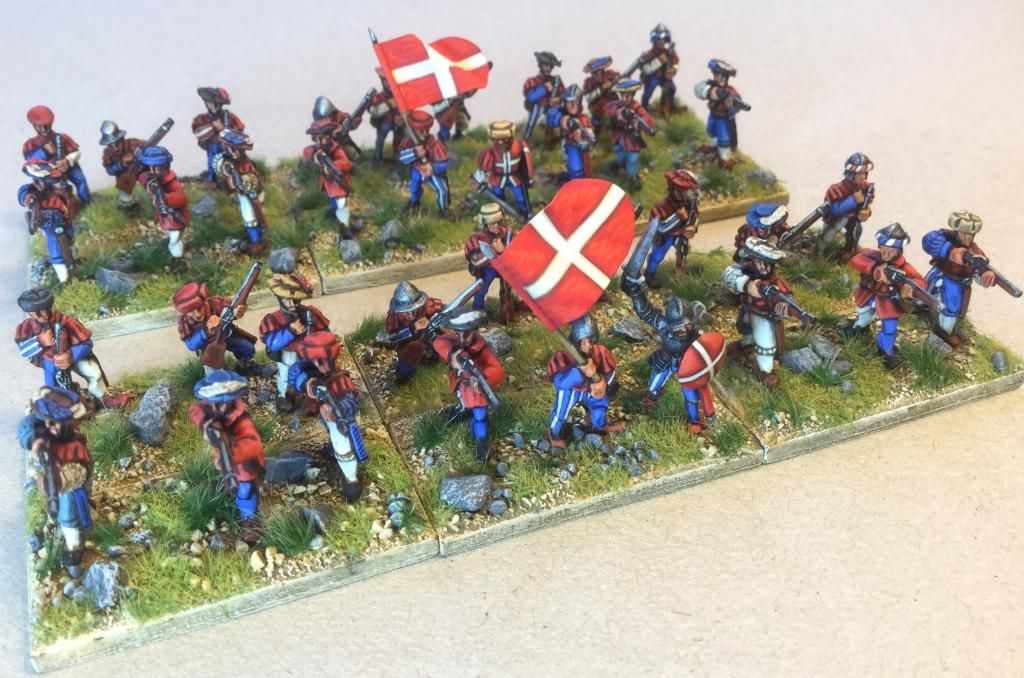
French Valois Arquebusiers

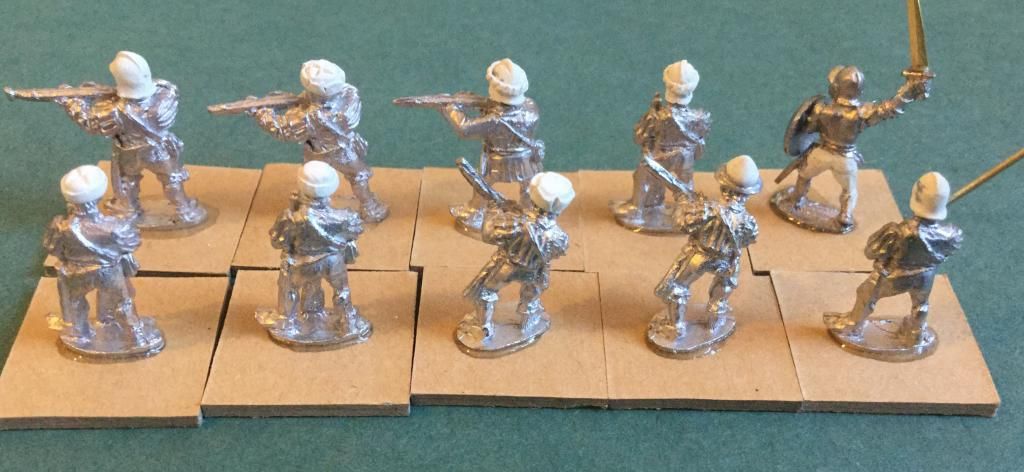
Having looked around for a while for suitable figures, I bought a bag of Old Glory generic arquebusiers RGE6 from Time Cast Models.

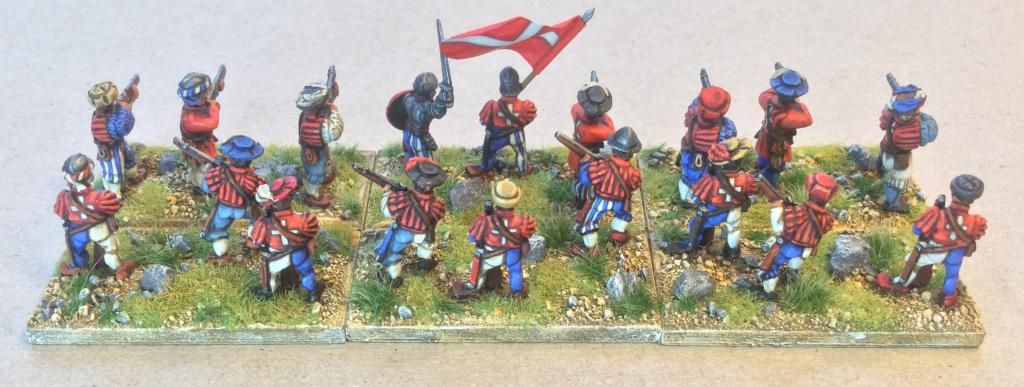
I painted up the first batch with a limited range of colours but they looked too much like Landsknechts and I didn't like that they all wore identical hats. So, after seeking some advise on the Miniatures Page, I modelled a selection of new hats and helmets with Miliput. The first ones were rather clunky but I was quite happy with the later ones. The officers are a couple of spare sword and bucker men from Venexia and Essex modified a bit to give them similar headgear to the others and remove the baggy pantaloons on the Venexia figure.


Once painted and mixed in with standard figures, this gave much more of the look I had wanted.


Sunday, 20 September 2015

Making lances

I originally posted an explanation of my lance-making process on the Slithering FOG-R board last year - I'm playing catch up with this blog to get to the current state of my painting progress.

It sounds a long process but each step is quick and, if you do a few together, it doesn't take long at all.

I use 0.8 mm brass wire. After shaping the point and cutting them to length, I mix up some Milliput and roll some into a long, thin (about 1mm dia) sausage. I cut a piece (about 30 mm long, IIRC) and wrap it around the lance in a spiral, starting with the spirals close together at the hand-end and widening the helix towards the point. I then roll the lance ona smooth cutting mat. Surprisingly this spreads the Milliput around the wire core very evenly, keeping the wire central. Then I set them aside to cure. Before the Milliput is absolutely hard, I cut the step for the hand with a sharp knife - doing it then avoids the risk if chipping or fracture.

Here is a photo of the lance making process:


For sanding the lance to final shape, I hold the lance in a pin vise. Rough shaping is with a file to give a uniform cone then with folded-over sand paper wrapped around a dowel to give the flared profile (the nose of the vise helps with this) and smooth surface.

The extra-long ones are for Essex figures, to compensate for needing an extra few mm below the hand. Although it makes the proportions wrong, I prefer to have the extra stability of having the lance glued to the figure at two points.

I painted about half the lances with the 'barber's pole' spiral pattern. Tis was also done in a pin vise, free hand, painting a bit then rotating 45 degrees or so and painting a bit more. You can actually do multiple steps, equally spaced for each rotation. If you look close enough, the spirals aren't that neat: I use a three shade method so the boundary from one colour to the other is softened, averages out and looks smooth. It takes a bit of practice but the method is quite easy. One thing to look out for is that to keep the spiral thickness about the same, the helix needs to change as the diameter reduces. The sad thing is that I suspect the barber's pole lances were not used in battle but they look pretty.

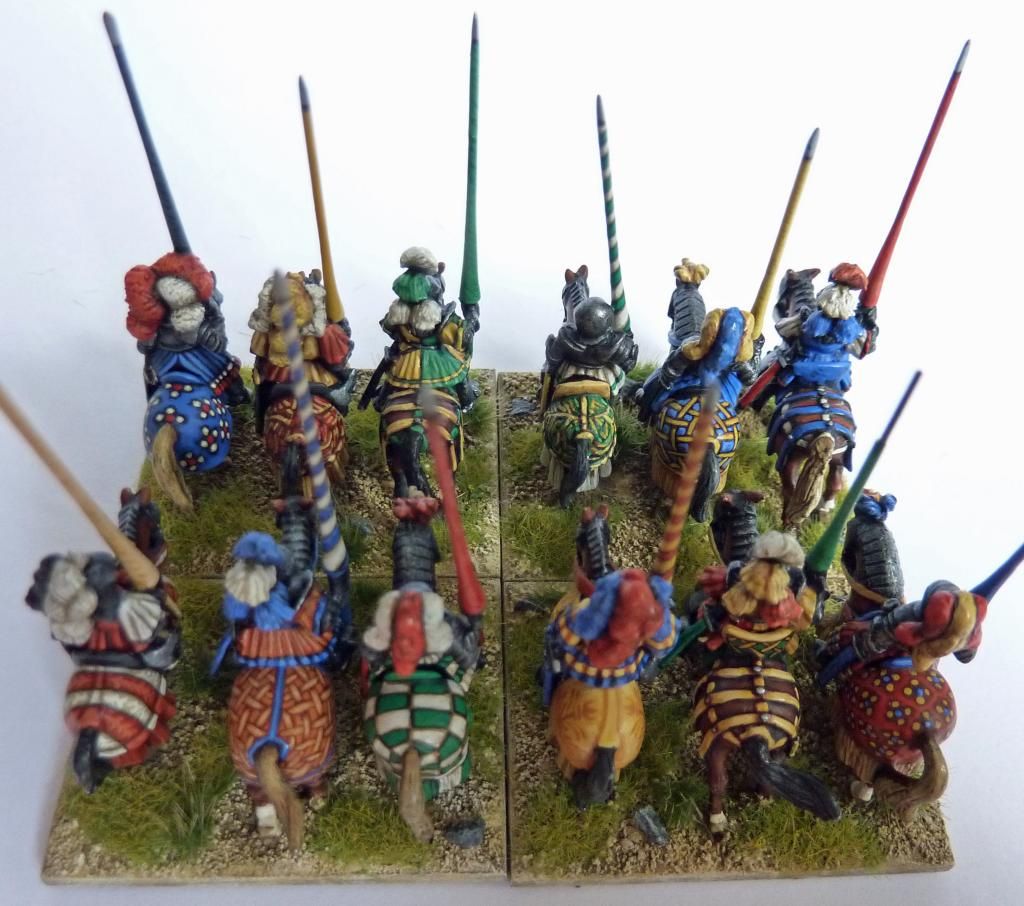
Essex Gendarmes

I have rather mixed feelings about these figures. They are very cleanly cast with good detail but most of the horses have a rather heads-down defeated pose and the thick, cast-on lances are held out to the side in what looks a very uncomfortable pose. Some of the figures are perfect for French Gendarmes but others are more Germanic looking and one had what looks more like a jousting helmet than the typical close helmet / armet.

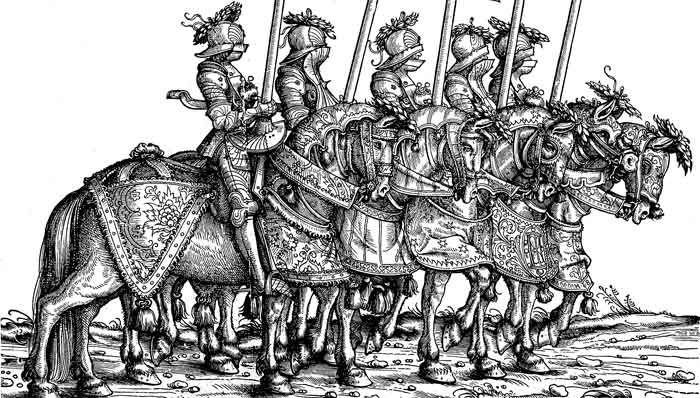
One of the horses has barding straight out of the Triumph of Maximilian - although very well done, it just doesn't look like the smoother style of barding seen used by French Gendarmes in the Pavia Tapestries and the Voyage de Genes. I wish in hindsight that I had remodelled this with Miliput.


As with the previous group of Minifigs and Asgard / TTG Gendarmes, I replaced the lances with wire/Miliput and bent the arms to bring them closer to the body.


More Gendarmes

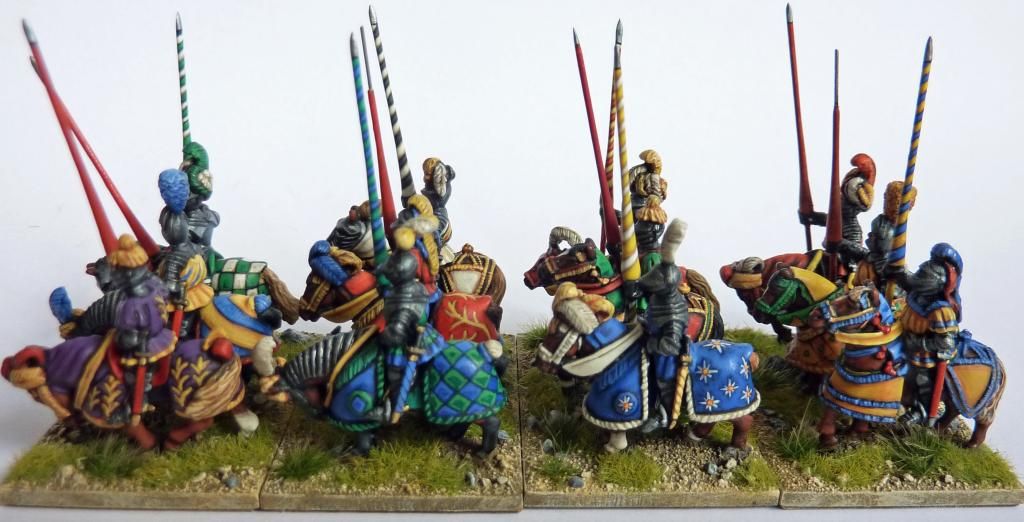
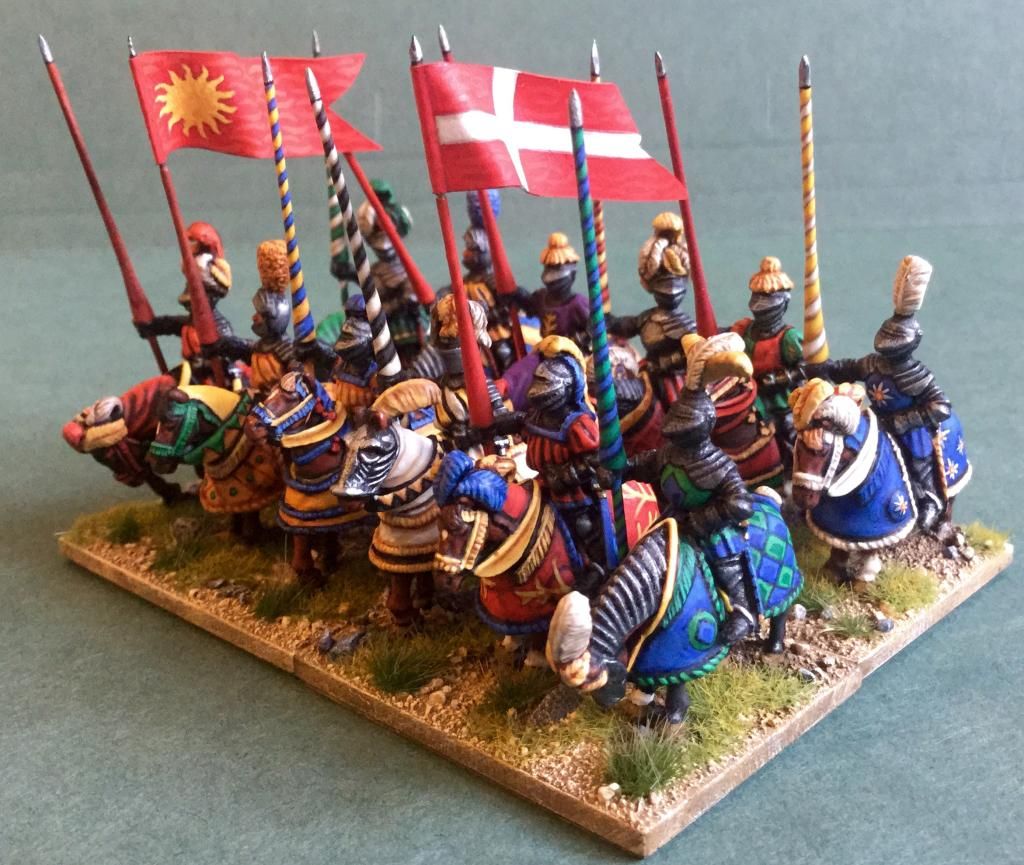
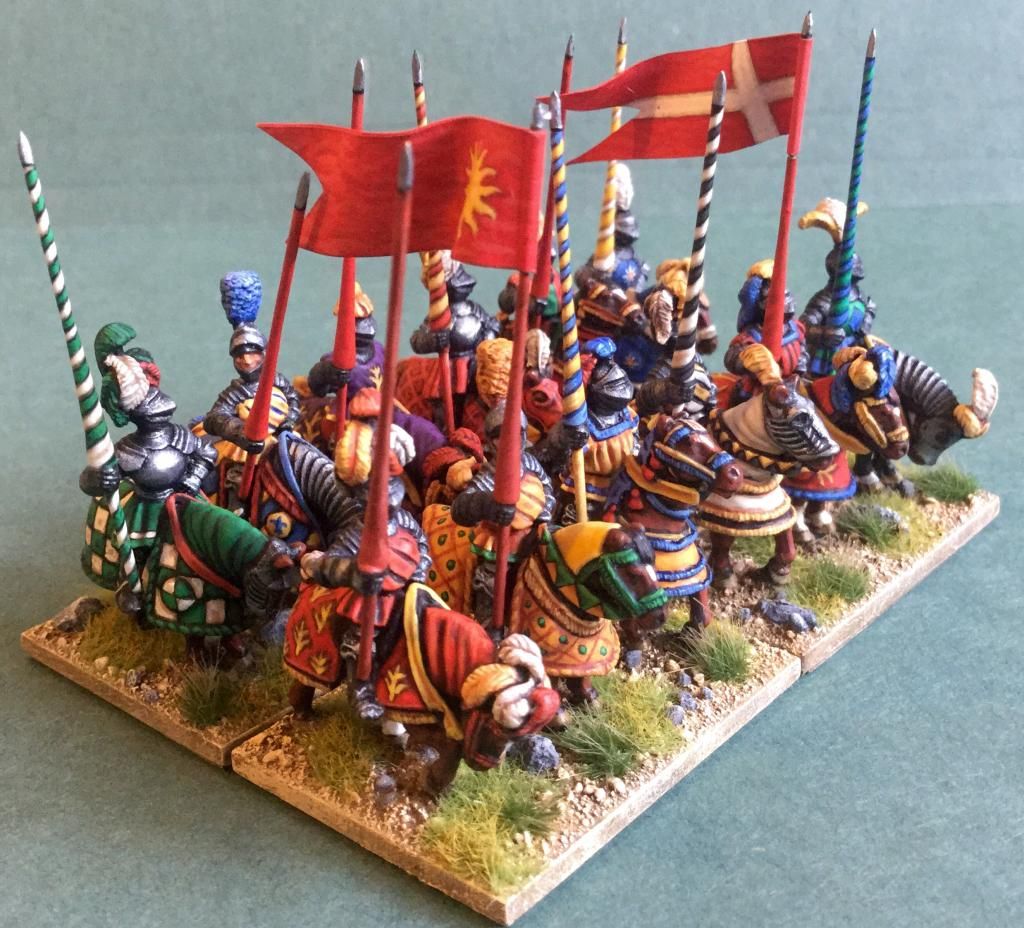
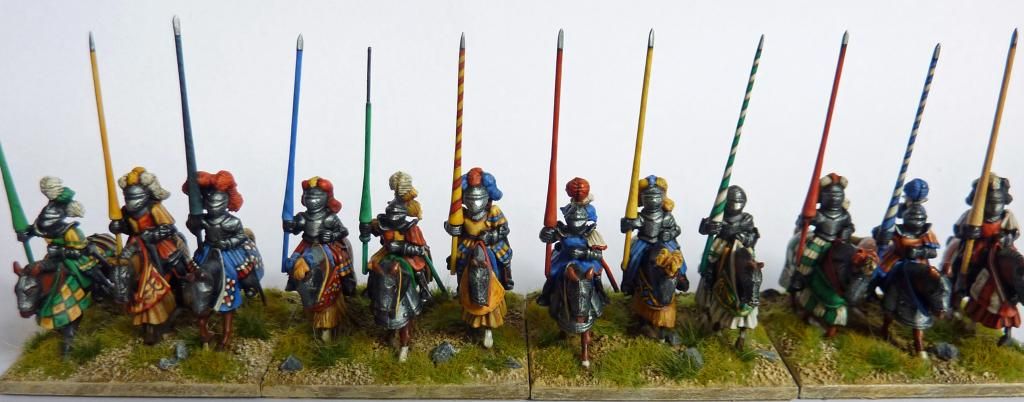
My lead mountain contained some more, unpainted 2nd and 3rd generation Minifigs and old Asgard gendarmes and painting another couple of units of Gendarmes was next on my jobs to do list. I only had enough figures for one unit so I sent off for a dozen Essex gendarmes to try to get more variety. When these arrived the difference in build was far too much to mix them in with the smaller and thinner Minifigs and Asgard/TTG figures in the same unit, though I thought they would look OK on the table together. 

One problem was the huge difference in their lances. I normally replace spears, pikes and lances with brass wire but plain wire doesn't look much like a late-medieval / renaissance lance, even with the blobs of epoxy that had seemed OK as a hand guard when I painted my old unit of gendarmes. Eventually I found a fairly quick and effective way of making replacement lances with brass wire and Milliput. I posted a how to for this some while ago on the Miniatures Page and will re-post it on here at some point - it is quite easy and nothing like as fiddly as it sounds. The end-result isn't perfect but they don't bend, and are better proportioned than the chubby telegraph poles cast on some figures. Most importantly it gives enough of a uniform appearance to allow figures from different manufacturers to be mixed without looking ridiculous. 


Part way through painting these, whilst looking for inspiration in contemporary illustrations and on some the excellent blogs of 28mm Italian Wars miniatures, I noticed that the rider's skirts weren't quite right, being too small and not covering the back of the saddle so I modified the later ones with Milliput.


Saturday, 27 June 2015

Old Gendarmes

Taking stock of my Gendarmes figures, I had a variety of figures painted but only enough for one FOG-R unit with three left over. 

Here is a picture of those original 1980s figures. They are a mix of old Minifigs Gendarmes (back row, left as we look at the picture) and Archers (front row, left) with Asgard / TTG French Gendarmes (front, 2nd from left) and Pensioners (no plumes, 3rd & 4th from left in the front). I had mixed up the horses to get more variety. I must have added to them a bit later because there were also a couple of the current (1990s?) Minifigs Early 16th C French Generals and one of their horses used to mount the third from left figure in the front rank.

I had replaced the various bendy lances with wire but my attempts to make them look like lances rather than spears was limited to a blob of Araldite in lieu of a lance guard and pennants.


The trouble is, the more I looked at contemporary illustrations, the less satisfied I was with these figures. With gradually evolving hindsight: the lances didn't look right, giving them pennants was a mistake, the horse barding didn't match (what are those fringes about?) and, though you can't see in this photo, the distinctive 'skirts' covering the back of the saddle were absent. In fact the old Minifigs gendarmes looked like they were wearing 3/4 length baggy culottes. 

I had enough unpainted (or badly painted) figures for another one and a half units and I decided I wanted to do better with these.